Monday, August 10, 2026
ONRSR Insight: Our New Model and Critical Risks
The Office of the National Rail Safety Regulator is in the midst of one of the most significant reforms since its inception in 2013.
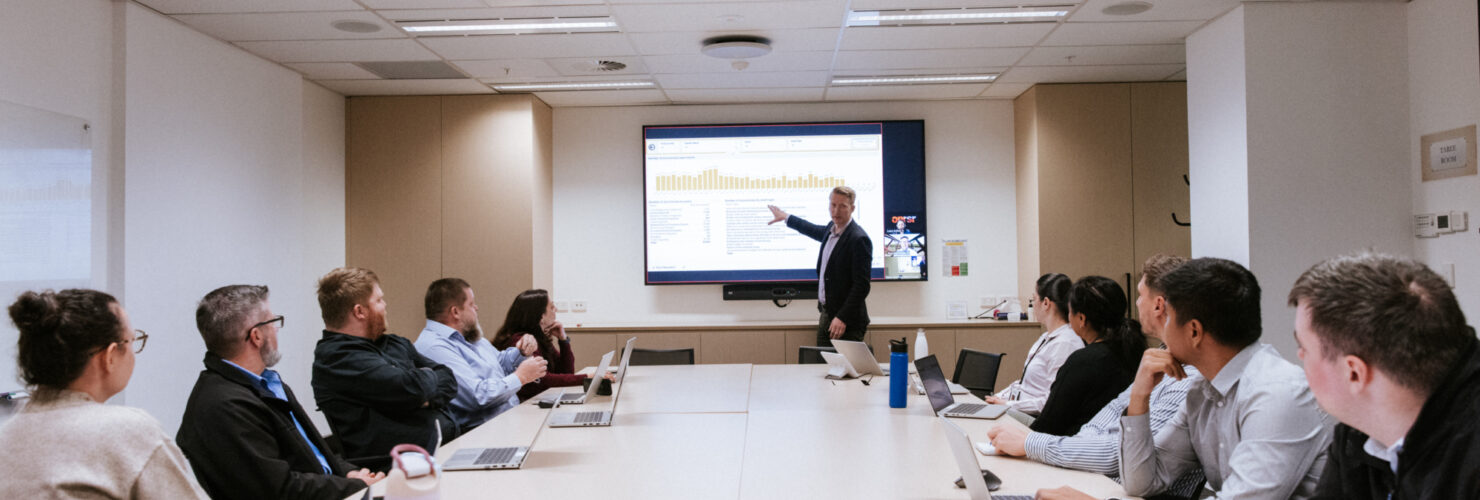
Chief Executive and National Rail Safety Regulator, Dr Natalie Pelham is driving a renewed focus on best practice in safety regulation as ONRSR seeks to continuously adapt and refine its approach.
ONRSR is determined to stay ahead of the modern regulation curve and has moved to place a greater focus on the examination of critical rail safety risks to ensure controls are in place and effective in the prevention of incidents and managing risks to safety.
The reforms are central to the recent release of ONRSR’s new Rail Safety Regulation Model (RSRM).
“We’ve been working really hard over a long period to bring the right balance to the delivery of our full suite of regulatory functions and activities under the Rail Safety National Law,” Dr Pelham said.
“We have significantly improved our understanding of how best to use our resources and to maximise our impact in driving better safety outcomes now and into the future.”
The RSRM identifies what ONRSR does, through four key drivers - Monitor, Investigate, Improve and Engage – to achieve compliance and safety improvements. The RSRM is complemented by a new ONRSR Regulatory Framework (in development), which documents how ONRSR regulates.
As the new model is embedded, Rail Transport Operators and other duty holders around the country should notice a proportionate and consistent regulatory approach comprising:
- Monitor: Risk-based activities such as audits, inspections and site visits designed to help monitor and secure compliance with the law. And provide information and advice to improve safety management.
- Improve: Building safety knowledge through the provision of actionable safety insights derived from applied analytics, and through defining safety problems and the programs to help solve them.
- Investigate: Rail safety investigations that increase understanding of the causal and contributing factors that influence safety management and where necessary enforcing breaches of the law.
- Engage: An expanding range of engagement and education activities/products to inform duty holders so they can better manage risks to safety.
“The model is part of an ongoing process to ensure we continue to evolve as a modern regulator – better defining, and making more transparent, what we mean by intelligence-led and risk-based regulation,” Dr Pelham said.
“It’s a logical next step after the investments we have made in strengthening our education and engagement and regulatory intelligence functions and establishing a standalone Statutory Compliance team responsible for our compliance framework, investigations, serious non-compliance, legal, and enforcement functions.”
“And to ensure we continue to meet our own expectations and those of industry when it comes to regular and relevant stakeholder engagement and educational activities which we have really boosted over the last 12 to 18 months.”
A key part of the new model is the focus on a Critical Risk Compliance Program (commenced on 1 July 2026) to inform audits and inspections on duty holders' management of critical risks.
ONRSR has defined critical risks as those managed by an operator that have the potential to result in catastrophic consequences.
“These events are inherent in railway operations and a key reason why the rail industry is subject to a rigorous regulatory framework - and why a dedicated rail safety regulator exists,” Dr Pelham said.
“Fatal events like those at Glenbrook, Waterfall, Wallan, Bindarrah, back to Granville and beyond are tragic and significant reminders of what can go wrong if we don’t maintain vigilance when it comes to safety.”
“To identify our critical risk program, we’ve undertaken extensive research of Australian and international incidents dating back over 100 years and mapped these against the unique profiles of modern-day rail operations.”
The process has also involved the use of risk models and hazard registers to provide a systematic approach to unpack the top-level events into precursors/causes, with the aim of providing appropriate coverage and a manageable number of critical risks to support compliance activities across all sectors of the rail industry.
While operators can and will identify their own critical risks, and acknowledging that not all risks apply to all operators, ONRSR has established an initial list of 20 critical rail safety risks that are the foundation of the 2026-27 Critical Risk Compliance (CR) Program:
- CR 1: Person struck by train at level crossing/vicinity of station
- CR2: Train strikes vehicle at level crossing
- CR3: Rail worker struck by train
- CR4: Train crew related factors (e.g. error, violation, impairment, train handling issues) leading to derailment/collision
- CR5: Fire/explosion on train or railway premises (inc. tunnels)
- CR6: Obstruction on track leading to train derailment/collisions (excl. level crossings)
- CR7: Rolling stock irregularity leading to train derailment/collision
- CR8: Earthworks failure leading to train derailment
- CR9: Significant incident within a possession
- CR10: Network controller/signaller error leading to derailment/collision
- CR11: Signalling equipment irregularity leading to train derailment/collision
- CR12: Structural failure/collapse leading to train derailment
- CR13: Track irregularity leading to train derailment
- CR14: Network controller/driver communication issues leading to derailment/collision
- CR15: Incorrect loading/marshalling of trains leading to collision/derailment
- CR16: Inability to effectively responds to a major incident/accident or emergency
- CR17: Collision between light rail vehicle and heavy road/light rail vehicle on shared right of way
- CR18: Person train interface hazard leading to significant injury/fatality (e.g. train moves with person caught in doors/gap, fall from open door of a moving train)
- CR19: Electrical traction irregularity leading to significant injury/fatality (e.g. overhead wires falling near occupied areas, failures resulting in electrocution)
- CR20: Collision between light rail vehicle and person on shared right of way
In time ONRSR will evolve the Rail Safety Regulation Model to further drive compliance monitoring through a dedicated focus on emerging rail safety risks and coordinated safety programs targeted at delivering system-wide safety improvements on high-priority issues such as level crossings.
“We work best together and the model will allow us to capitalise on the breadth of expertise and experience we have as one ONRSR team,” Dr Pelham said.
“We all contribute to regulatory activities whether they are in-field or in the office and using the new ONRSR Rail Safety Regulation Model means that at all times ONRSR people are working to enable and deliver efficient and effective regulation.”
“In the end that is fundamental to us achieving our vision of safe railways for Australia.”
ONRSR is communicating to operators and duty holders on the introduction of the new Rail Safety Regulation Model and Critical Risk Compliance Program through a range of platforms including its website, e-newsletters, social media channels and via commercial and tourist and heritage forums currently rolling out across the country.